
The Role of Markush Structures in Chemical Patent Drafting
In the chemical and pharmaceutical industries, innovation rarely stops at a single molecule. A promising lead compound often evolves into a family of analogues, each with potential therapeutic or commercial value. For patent professionals, the challenge is to protect not only one compound, but also the broader chemical space surrounding it, where slight variations in chemical composition can lead to different therapeutic effects. This is where Markush structures play a central role.
What are Markush Structures?
A Markush structure is a generalized chemical formula that represents a genus of related compounds. It describes a set of related molecules with a common core structure and substituent structures at each position. Instead of drafting a claim to cover only one molecule, an inventor can protect an entire class by using variable substituents (often written as R-groups). The following is a typical example of claiming a chemical compound by the use of the Markush formula:
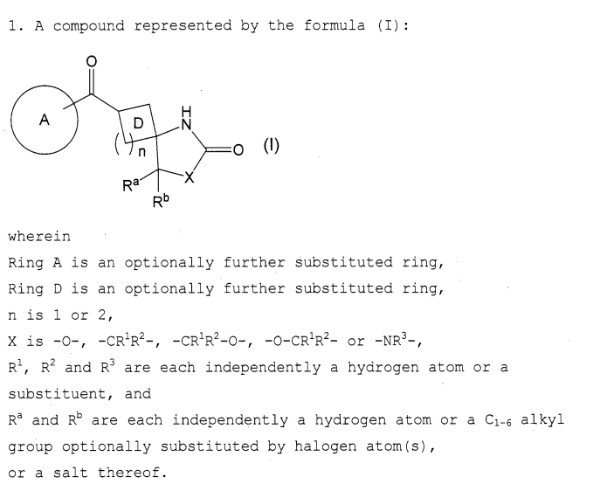
In one stroke, this approach can secure protection over hundreds or even thousands of related compounds, many of which may not yet have been synthesized but are foreseeable to a skilled chemist.
Why Are They Important?
Markush drafting has become one of the most powerful tools in chemical patenting. It provides:
- Broad Protection: Prevents competitors from exploiting small structural modifications.
- Future-Proofing: Safeguards derivatives that may be discovered later in R&D.
- Commercial Value: Especially vital in pharmaceuticals and agrochemicals, where small tweaks can define exclusivity in billion-dollar markets.
Best Practices in Drafting
- Ensure claims are broad but well supported with examples and reasoning.
- Avoid overly long or vague R-group definitions that may invite clarity challenges.
- Be mindful of jurisdictional differences: the USPTO, EPO, and Indian Patent Office each apply their own scrutiny to Markush claims.
- Identify relevant substituents and core structures carefully.
- Ensure claims are defensible across multiple jurisdictions.
- Anticipate future modifications as flexible drafting can protect subsequent innovations.
Conclusion
Markush structures are not just a legal drafting device; rather, they are a strategic shield for chemical innovation. When thoughtfully crafted, they protect an entire research trajectory, giving inventors and companies the confidence to invest in developing next-generation molecules.
In today’s competitive chemical and life sciences sectors, the ability to draft and defend strong Markush claims often makes the difference between a single-molecule patent and a blockbuster-level patent portfolio.
Role of Markush Structure
How PATHtoIP Supports Patenting of Markush Structures
At PATHtoIP, we specialize in guiding innovators through the complexities of Markush claim drafting, ensuring clarity, enforceability, and strategic IP coverage worldwide. At PATHtoIP, we help innovators navigate this space effectively.
Our services include:
- Freedom to Operate (FTO) and White Space Analysis – identifying where novel chemical space exists and avoiding potential infringement.
- IP Landscaping and Process Claim Reviews – analyzing existing Markush patents and related filings to inform strategy.
- Strategic Filing Advice for Novel Molecules – guiding patent protection for molecules with structural variations.
- Strategic Patent Drafting for Markush Claims – drafting precise, defensible claims to maximize IP coverage.
- Risk Mitigation in Multi-Jurisdictional Filings – ensuring Markush claims are robust across different patent offices.
Who We Are
At PATHtoIP, we believe every innovative idea deserves the right protection and the opportunity to create a lasting impact. We are a leading Intellectual Property (IP) consulting firm dedicated to helping innovators, startups, SMEs, researchers, academic institutions, and enterprises transform ideas into valuable intellectual assets.
Our expertise spans patents, trademarks, copyrights, industrial designs, patent analytics, freedom-to-operate (FTO) studies, white space analysis, technology landscaping, and comprehensive IP portfolio management. By combining technical knowledge with legal and business insights, we deliver practical IP strategies that support innovation, commercialization, and sustainable business growth.
Our mission is to empower creators and businesses with the confidence to innovate, compete, and grow in an increasingly knowledge-driven economy. Whether you’re launching your first invention or managing an established IP portfolio, PATHtoIP is committed to helping you secure, protect, and maximize the value of your intellectual property.
Stay connected with PATHtoIP for the latest insights on patents, trademarks, copyrights, innovation, and IP strategy. Follow us on LinkedIn, Instagram, Facebook, X , Pinterest, YouTube, and Quora for expert guidance, industry updates, case studies, and practical tips to protect your innovations.