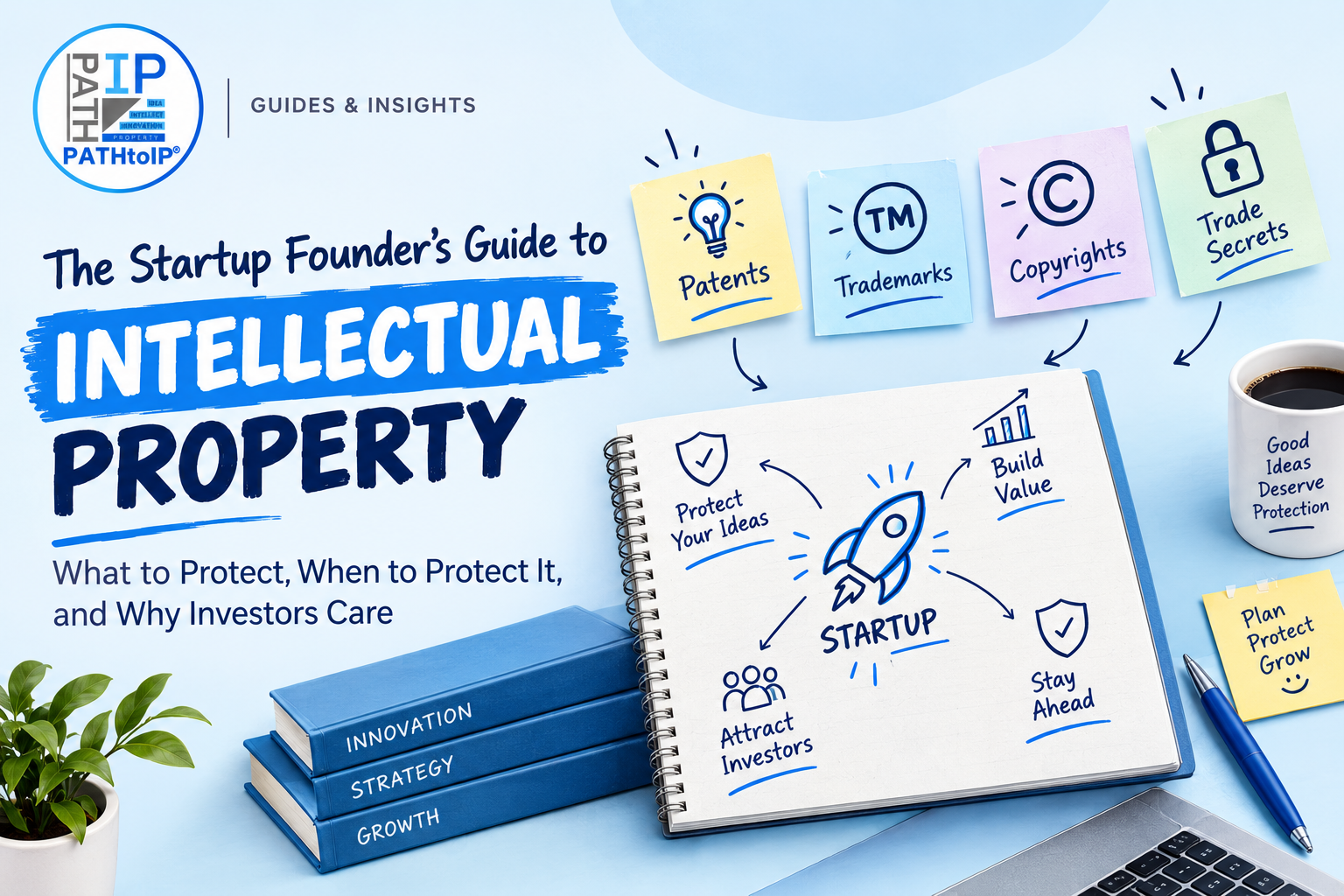
What is intellectual property for Startups
Most startups do not lose their IP to a competitor stealing it; they lose it by never protecting it in the first place. For an early‑stage founder IP can feel like a “problem: something to deal with once there is revenue once there is a legal budget once the product is further along. In practice the opposite is true. The startups that get IP early are the ones that avoid the two most expensive outcomes: losing rights that were never filed for and losing investor confidence during due diligence.
This guide walks through the IP basics every founder should know, how to build a protection strategy on a startup budget, the mistakes that cost founders the why investors care about IP more than most founders expect.
Why IP Matters for Startups
For an early‑stage company IP is often the valuable asset on the balance sheet, sometimes the only defensible one. Product features can be copied, pricing can be matched, but a granted patent, a registered trademark or a well‑protected trade secret creates a barrier competitors cannot simply out‑execute their way. IP also directly affects valuation. Acquirers and investors do not just buy what a startup has built; they buy the right to keep others from building the thing. A startup with no IP protection is, in effect, selling a product anyone else’s free to replicate.
The Four Types of IP Every Founder Should Know
Patents

It is important to protect how something works, a process, mechanism or technical solution. Protecting the way something works is especially useful, for startups that build technology, hardware or technical processes (software patents are narrower and jurisdiction-dependent). Patents are expensive and slow. Patents are the best protection available and patents typically last for twenty years from filing.
Trademarks
Protect your brand identity, the name of your company, the logo, the product names and the taglines. Unlike patents, trademarks are much cheaper. Can be filed early even before the business starts making money. They are also one of the often delayed forms of protection which can be very risky. A startup that builds brand value using a name that is not registered might have to change the name if someone else registers it first.

Copyrights
Protect original creative and written expression code, website content, marketing material, documentation, design assets. Copyright exists automatically upon creation in most jurisdictions, but formal registration strengthens enforcement rights, particularly in the US.

Trade Secrets
Protect confidential business information algorithms, customer data, internal processes, pricing models, that aren’t publicly disclosed. Unlike patents, trade secrets require no filing or registration, but they only stay protected as long as they stay secret, which means internal confidentiality practices (NDAs, access controls, employee agreements) do the actual protecting.
Building an IP Strategy on a Startup Budget
Founders rarely have the budget to protect everything at once and they don’t need to. A workable approach:
- Trademark the brand early: It’s the cheapest protection to secure and the most damaging to lose. File before a public launch, not after.
- Time patent filings to disclosure: Most jurisdictions operate on a “first to file” basis, and public disclosure (a demo, a pitch, a press mention) can start a clock or bar filing entirely in some countries. If the technology is core to the product, file, or at minimum file a provisional application, before any public disclosure.
- Default to trade secret protection where patenting isn’t practical: Not everything needs to be patented; algorithms and internal processes that are hard to reverse-engineer are often better protected by confidentiality than by a public patent filing (which discloses exactly how it works).
- Copyright the obvious things automatically, register the valuable ones formally: Code and content are protected the moment they’re created; formal registration matters most for assets central to enforcement, like proprietary software.
- Sequence by risk, not by category: The right question isn’t “which IP type should I file first”, it’s “what’s most likely to be copied or challenged first.”
Common IP Mistakes Startups Make
- Filing too late: Waiting until after a funding round, product launch, or public demo, by which point the “novelty” required for a patent may already be compromised, or a competitor may have filed first.
- Assuming a domain name or business registration counts as trademark protection: It doesn’t. Neither prevents someone else from registering the same name as a trademark.
- No IP assignment agreements with co-founders, employees, or contractors: Without a signed assignment, IP created by a contractor or early co-founder can legally remain theirs, a serious problem discovered most often during a funding round or acquisition.
- Treating trade secrets casually: Sharing proprietary processes in pitch decks, unprotected demos, or without NDAs can void trade secret protection entirely.
- Ignoring international protection: IP rights are territorial. A patent or trademark registered only in one country offers no protection elsewhere, a real risk for startups expanding or selling internationally.
IP and Fundraising: Why Investors Care
IP due diligence is now a standard part of most institutional funding rounds, and gaps here can slow down or derail a deal. Investors typically look for:
- Clear ownership: Can the company prove it owns its core IP, with signed assignment agreements from every founder, employee, and contractor who touched it?
- Freedom to operate: Is there a risk the company’s product infringes on someone else’s existing patent or trademark?
- Defensibility: Is there a filed or granted patent, or is the “IP” just an idea with no legal protection behind it?
- Clean chain of title: For patents especially, investors check that filing and ownership records are consistent and unbroken, errors here can be costly or slow to fix.
A startup that walks into diligence with clean IP documentation moves faster through the process and signals operational maturity. One that doesn’t often face delayed terms, reduced valuation, or investor-mandated IP cleanup as a closing condition.
How PATHtoIP Helps
PATHtoIP works with startups from the earliest stages to build IP strategies that match their budget and growth stage, from trademark filing and patent drafting to Freedom to Operate analysis and IP due diligence preparation ahead of funding rounds. Whether you’re protecting your first product or preparing for your next raise, our team helps you file the right protections at the right time, across India and internationally.
Stay connected with PATHtoIP for the latest insights on patents, trademarks, copyrights, innovation, and IP strategy. Follow us on LinkedIn, Instagram, Facebook, X , Pinterest, YouTube, and Quora for expert guidance, industry updates, case studies, and practical tips to protect your innovations.
Frequently Asked Questions
When should a startup file for its first patent?
Ideally before any public disclosure of the technology, a demo, a pitch deck shared broadly, or a product launch. Many jurisdictions operate on a first-to-file basis, so delaying filing risks losing rights to a competitor who files first, even with a later invention.
Do we need a lawyer to trademark our company name?
Not strictly, but professional filing significantly reduces the risk of rejection or later disputes, especially when clearing the name across multiple jurisdictions or trademark classes.
What's the single most common IP gap investors flag in due diligence?
Missing IP assignment agreements, cases where a co-founder, early employee, or contractor built something core to the product without a signed agreement transferring ownership to the company.