Brand on the Move: The Rise of Motion Trademarks in Modern Intellectual Property
The Indian Trade Marks Act does not explicitly define motion marks, nor does the draft Manual address them in detail. Still, Section 2(1)(zb) broadly defines a trademark as something that can be graphically represented and distinguishes one’s goods or services.
What Is a Motion Trademark?
A motion trademark involves movement or position change in elements like shapes, colors, or symbols, and may include text or images. It protects brand-specific motions like animations or gestures.
For example –
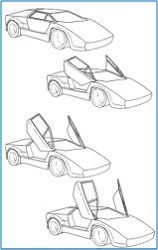
- Owner – Automobili Lamborghini S.p.A.
- Serial number – 001400092
- Application date – November 26, 1999
- Mark description – The trademark relates to a unique vehicle door design where the doors open upward around a horizontal axis, positioned across the vehicle’s width.
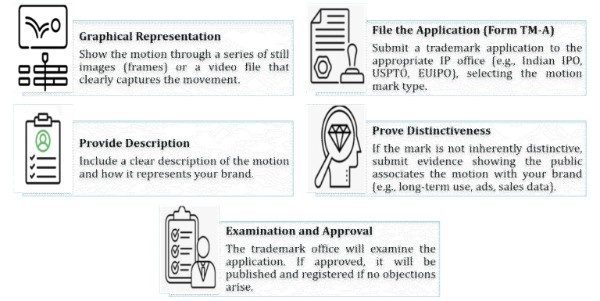
How to Register Motion Mark as a Trademark?
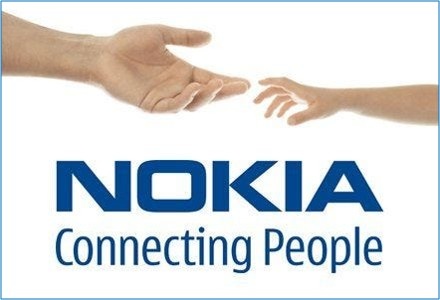
Case Study: Nokia’s Connecting Hands Logo
- In India, Nokia’s “Connecting Hands” was the first motion mark application, filed under Registration No. 1246341. However, it was eventually registered as a device mark, not a motion mark.
- The logo features two hands reaching out, symbolizing connection and communication. While it gives an impression of movement, it is a still image.
- To qualify as a motion mark, the actual movement or animation must be a core part of the brand’s identity.
Conclusion
- Motion marks represent a modern shift in trademark protection, capturing the dynamic nature of today’s branding. While India has begun to acknowledge these non-traditional marks, rigid requirements, especially the need for graphical representation create barriers to registration.
- In contrast, countries like the US and EU provide more adaptable frameworks that embrace multimedia formats.
- To remain globally competitive, India must update its legal standards to accept digital file formats like MP4, enabling more accurate motion representation.
- Such reform would encourage innovation, protect evolving brand identities, and better reflect the realities of digital marketing.
- Clearer guidelines, increased awareness, and policy updates will be essential for broader acceptance.
- By embracing motion marks, India can future-proof its trademark regime and strengthen its position in the global IP landscape.
- As businesses increasingly rely on digital branding across websites, mobile applications, and video platforms, motion trademarks help safeguard unique brand identities and prevent unauthorized imitation. Understanding motion trademarks enables businesses, startups, and innovators to strengthen their intellectual property strategy while creating engaging and legally protected brand experiences.
- Motion trademarks are redefining brand identity by protecting distinctive movements, animations, and dynamic visual elements that consumers associate with a particular brand. Unlike traditional trademarks that protect static logos, names, or symbols, motion trademarks safeguard unique sequences of movement capable of distinguishing one company’s products or services from another.
- Registering a motion trademark can help businesses prevent unauthorized imitation, strengthen brand recognition, and enhance the commercial value of their intellectual property portfolio. Industries such as entertainment, technology, automotive, gaming, consumer electronics, and sports frequently rely on motion trademarks to differentiate their products and create memorable customer experiences. Understanding how motion trademarks work enables businesses, startups, and innovators to build stronger brands while securing long-term competitive advantages in an increasingly visual and digital marketplace.
If you have any queries related to the Trademark search, please feel free to connect. At PATHtoIP LLP we ensure that every client receives exceptional results & insights through high-quality Intellectual Property research. Motion Trademarks As an experienced firm, we are dedicated to providing IP protection & delivering results capable of reaching your goals.